
Start with one physical item and identify every live advert for it. That is the core of an eBay and Depop inventory reconciliation. Counting the listings in two shops is useful, but equal totals do not prove that the same items are available or correctly linked.
Use this manual checklist for one-off stock such as individual used garments. Work with a small group first, especially if you have inherited older listings or used more than one cross-listing service.
Choose a small, defined audit batch
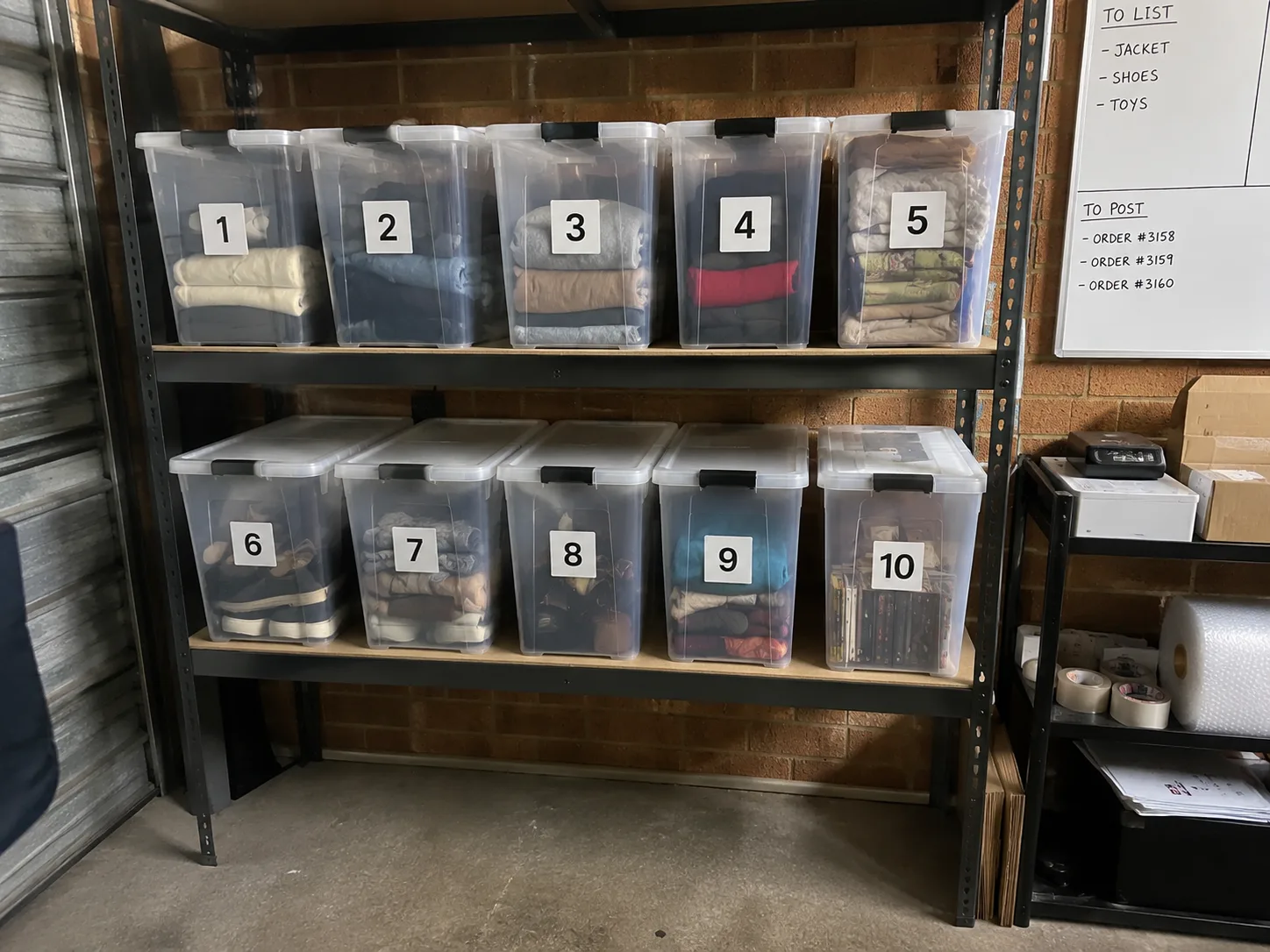
Pick one storage tub, one rail or twenty items with known stock references. Write down the scope and the time you started. Avoid changing that batch while you are establishing its starting position.
You need three views: what you physically have, what is live on eBay, and what is live on Depop. If you use Listalong, check its item record and the marketplace links too. The normal linked-store workflow explains the product’s role; the audit still needs your judgement about the real stock.
Keep orders awaiting dispatch outside your available-stock batch. A parcel on the packing bench is not stock ready for a new buyer.
Build a simple reconciliation sheet
Use a notebook or your preferred spreadsheet. The important part is the record structure, not the software.
| Field | What to record |
|---|---|
| Stock reference | Your own item or SKU reference |
| Physical location | Tub, shelf, rail or dispatch area |
| Item identity | Brand, type, labelled size and a distinguishing detail |
| eBay listing | Full URL or item identifier, plus current availability |
| Depop listing | Full URL or listing identifier, plus current availability |
| Linked record | What you can confirm in Listalong, if used |
| Exception and action | The unresolved issue and the next check |
| Reviewed | Date and result of the final check |
Keep buyer names and addresses out of a stock sheet unless your separate order workflow needs them. Listing URLs and internal stock references are normally enough for this audit.
Match identity before deciding what is missing
Take the physical item out and compare its label, measurements, photographs and flaws. A navy shirt in size M may look like another navy shirt in size M; a repaired cuff or a particular label can distinguish them.
Use your own reference consistently. The numbered-tub storage guide explains a straightforward way to find stock after a sale. A location reference helps you find an item, but it does not prove that two online listings refer to the same garment.
Do not overwrite a stock reference or remove an advert merely because a title looks duplicated. First establish whether you have one physical item advertised twice on one marketplace, or two separate items with similar descriptions.
Sort exceptions into separate actions
The following rows are illustrative audit outcomes, not actual customer records or Listalong status names.
| Example | What the audit finds | Next action |
|---|---|---|
| T12-014: denim jacket | One item present; one live advert on each marketplace; linked pair confirmed | Record the check as complete |
| T12-015: wool jumper | Item present; eBay advert found; no Depop advert after a careful search | Decide whether to cross-list this item, then inspect the result |
| T12-016: trainers | Item present; two live eBay adverts appear to be the same pair | Confirm their identities and which advert should remain before taking action |
| T12-017: shirt | Both adverts exist; the relationship between them is unclear | Resolve the link before creating another copy |
| T12-018: dress | Sold order exists; the other advert still appears available | Check the sale, matching item, connection and destination listing promptly |
| T12-019: bag | Advert is live but the item cannot be located | Treat availability as unresolved and investigate the physical stock |
Do not bulk-cross-list unresolved exceptions. A missing record in one view does not necessarily mean the destination advert is missing. Open the marketplace itself and inspect the actual listing.
Check sold stock as a separate pass
Review the paid orders for your audit batch and identify the physical item being packed. Then inspect the matching advert on the other marketplace. If its availability is unexpected, confirm that you are looking at the correct pair rather than another similar item.
Listalong’s sold-item guidance explains that linked items are normally removed from the other marketplace within minutes. That timing can be affected by connections and marketplace responses. An audit should record an unresolved discrepancy, not silently mark it fixed because an automated action was expected.
For a duplicate sale or unavailable item, use the relevant order process promptly and record the real reason. This worksheet is not a substitute for communicating through the marketplace or resolving an order.
Check the result of each correction
Work through one exception at a time. Keep the original URLs in your notes so that you can distinguish the advert you changed from any replacement listing.
After correcting a record or publishing an intended second-marketplace listing, open the final URLs again. Check identity, price, condition, availability and the supported linked relationship. If you cannot establish the right linking or recovery controls in Listalong, contact support before applying a large batch action.
Cancellations and refunds need their own physical-stock check. Do not put an item back into the available pile merely because a payment was reversed. The returns and cancellations checklist explains when to consider relisting.
Make the next audit easier
At the end of the batch, count completed checks and unresolved exceptions separately. A short list of known problems is more useful than a full sheet with assumed matches.
Keep a few repeatable habits: assign a reference when the item is prepared, record its location, inspect the destination after cross-listing, and review linked availability after sales. Use the two-marketplace selling guide for the wider routine.
Scope and review date
Prepared 3 November 2026. The worksheet and examples are editorial suggestions, not a measured inventory study. Product statements are based on Listalong’s workflow and sold-item guide. Multi-quantity stock, variants and specialist inventory systems need separate checks.
Frequently asked questions
Is an identical title enough to match two listings?
No. Check the physical item, its stock reference, photographs and marketplace URLs. Two similar garments can be separate stock items.
Does this checklist automatically fix Listalong links?
No. This is a manual audit. Check the product controls available to your account and contact support when a link or sold status is unclear.
Should I cross-list everything again to fix missing records?
No. Check whether the destination listing already exists first. Publishing another copy can turn a record problem into duplicate live stock.