
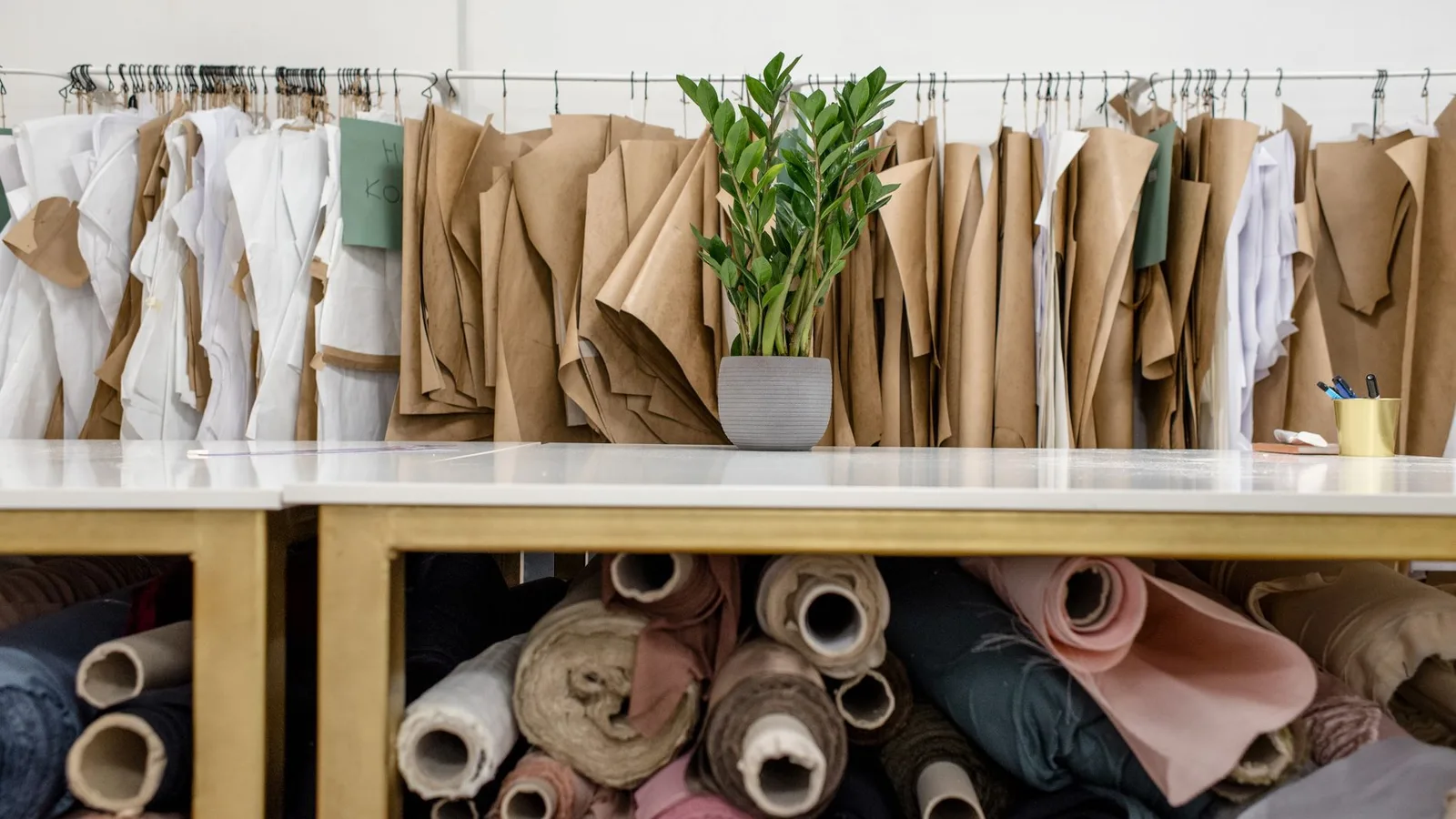
A metre of fabric can be one generous cut, two narrow strips or a piece with a sample square missing from the middle. All three might look the same folded on a shelf. At Reverse Garbage in Marrickville, the first question for a reseller is what a buyer could cut from the piece once it’s unfolded.
Where to shop in Sydney
Reverse Garbage sells creative reuse materials at 30 Carrington Road, Marrickville, NSW. Its warehouse carries changing supplies of fabric, haberdashery, craft materials and props. The shop lists Monday to Saturday 9 am–5 pm and Sunday 9 am–4 pm. If you need a particular colour or quantity for an order, ask about availability before making the trip. Reverse Garbage warehouse and opening hours
Measure the rectangle someone can use
Ask to unfold the piece on a clear surface. Measure the usable width between the finished edges, then the uninterrupted length. If the shape is irregular, sketch it in your phone and record the largest sound rectangle. The narrow tail may suit a small project but won’t help someone cutting a large panel.
Suppose a buyer wants two 70 × 70 cm cushion panels, including seam allowance. A piece measuring 135 cm across won’t fit them side by side. It needs at least 140 cm of clear length to place one above the other. If the buyer wants the same flower centred on each panel, allow for the pattern repeat as well. Three separate 60 cm remnants won’t produce either panel, even though their combined length is 180 cm.
| Check at the shelf | Detail to put in your listing |
|---|---|
| Marks, holes or fading along the outside fold | Photograph the defect beside a ruler and give the remaining clear dimensions. |
| Two pieces of a similar colour | Unfold them side by side in the same light. Photograph both if the shades differ. |
| Fibre name on a label | Show the label with the cut it belongs to. Describe an unlabelled fabric by its observable weave, weight and drape. |
Put a price on the useful cuts
Imagine you can make two listings from a bundle and expect $44 in combined item sales, with buyers covering postage at cost. Allow $6 for selling costs and packing, $9 for measuring and photographing the pieces, and $12 for the profit you want. Your maximum for the bundle is $17. At a $15 purchase price, $14 remains after those costs and your time.
The awkward offcuts get no value in that first calculation. If you later sell them as a clearly measured patchwork bundle, record that against the original purchase. To check the $44 assumption, search for sold fabric by usable length, width and any identifiable maker. A full-width, labelled length makes a poor comparison for a bag of scraps. How to research Australian sold prices