
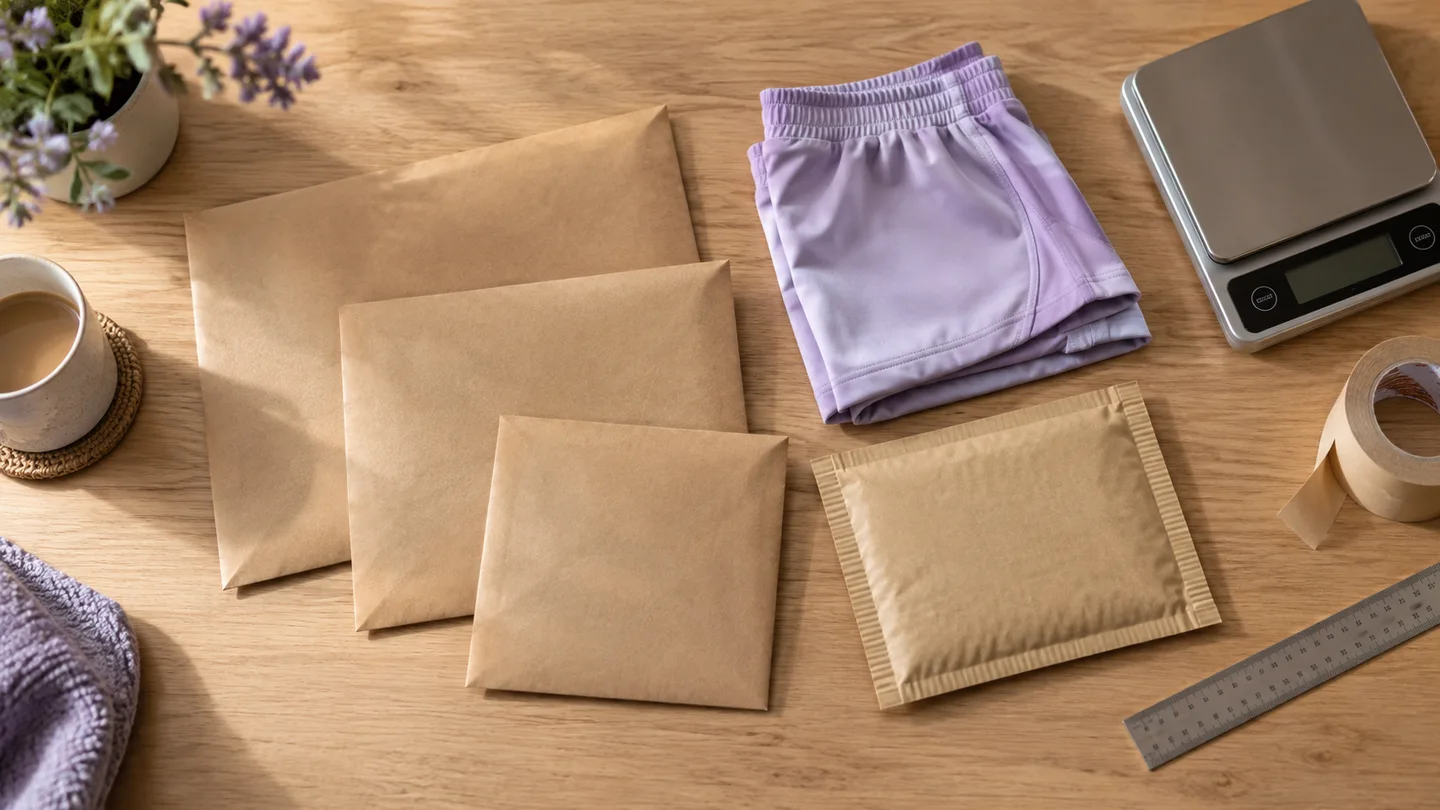
You find a small item online with postage of just a few dollars. Meanwhile, your parcel quote costs almost as much as the item itself. How are other sellers doing it?
Sometimes they use untracked letter postage instead of a parcel service. Others have discounted parcel rates, pack more efficiently or include some delivery cost in the item price.
The useful question is: what is the cheapest suitable way to send your particular item?
Smarter postage.
Check the service, the fully packed item and the total cost. A cheap delivery charge does not always reveal what the seller paid.
Prices checked 24 September 2026. All amounts are AUD. Images are AI-generated illustrations, not photographs of tested or approved mailpieces.
The $3.70 postage option people overlook
Regular large-letter postage starts at $3.70 for eligible packed mail up to 125g. This helps explain some of the low delivery prices you see on small-item listings.
Eligibility comes first.
This is untracked letter postage, not a flat price for every small parcel.
| Regular domestic letter | Postage only |
|---|---|
| Small letter, up to 250g | $1.85 |
| Large letter, up to 125g | $3.70 |
| Large letter, over 125g to 250g | $5.55 |
| Large letter, over 250g to 500g | $9.00 |
These are ordinary stamp prices. Add your envelope and protective packaging costs. Australia Post’s current rates.
Weigh the complete package. A product weighing 120g may exceed the lowest large-letter band after you add its mailer, padding and label.
Why the 2cm measurement matters
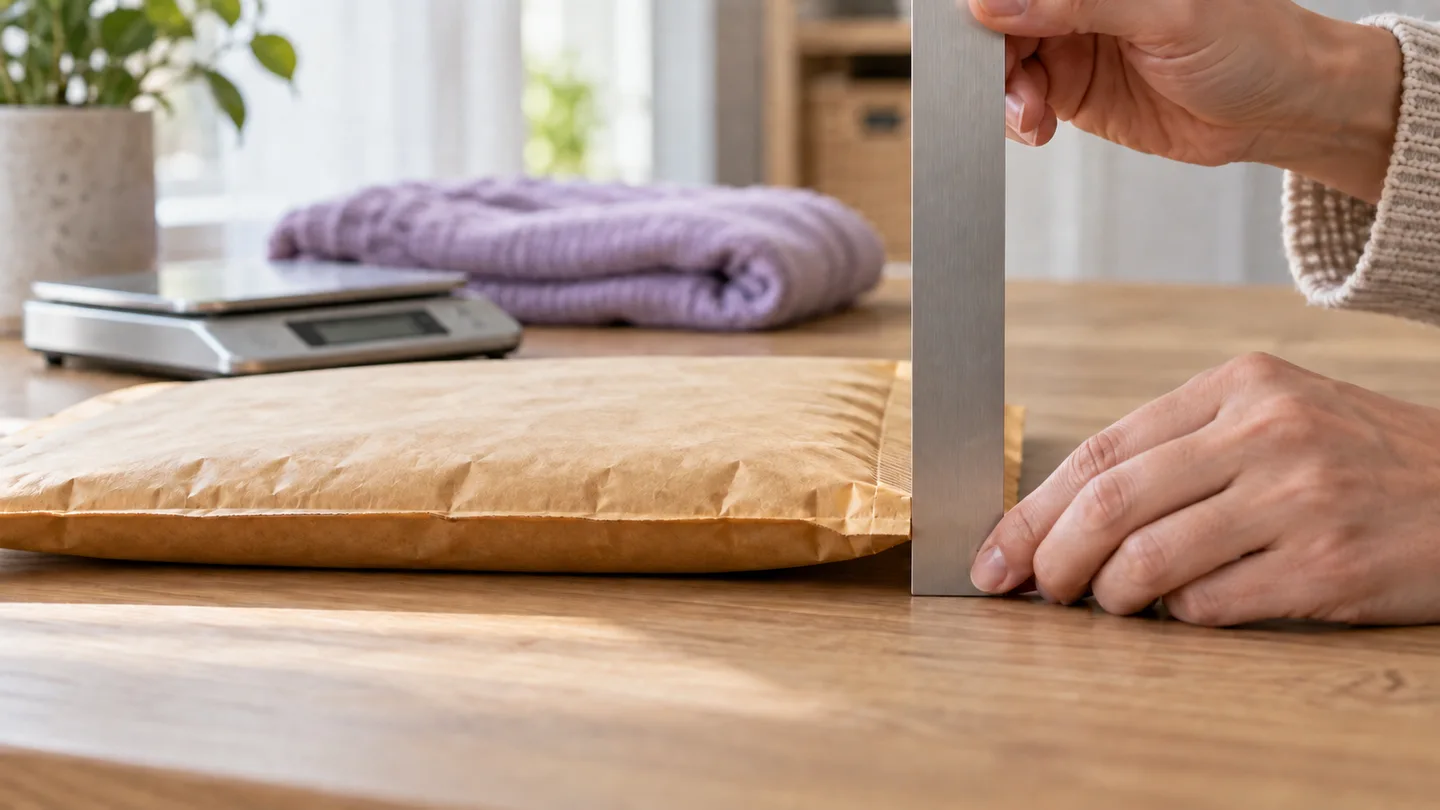
A domestic large letter can measure up to 260 × 360mm, with a maximum thickness of 20mm and weight of 500g. Small letters have a tighter 5mm thickness limit.
Measure the sealed package at its thickest point. Folded waistbands, buckles and bunched-up corners matter.
Australia Post also requires letter contents to be flexible and classifies rigid or inflexible material as a parcel. Being thin enough does not, by itself, make an item eligible. Read the letter requirements.
DVDs, watches and thin clothing: what sellers actually send
I’ve sent watches in padded mailers before, and I’ve seen sellers use inexpensive letter postage for DVDs. If you’ve wondered how sellers keep their delivery charges so low, flat packaging is part of the answer.
There is still a difference between what has arrived successfully and what meets the published letter requirements. Before relying on the cheapest rate, check the item you’ve actually packed.
DVDs and watches
DVDs and watches can fit into relatively flat packaging, which helps explain why you see them offered with cheap postage.
Their rigid components still matter under the published letter rules. Before setting a selling price around letter postage, take a packed sample to a Post Office for assessment. A previous delivery does not establish eligibility for every similar item.
Gym shorts and lightweight clothing
Thin, flexible clothing is a more plausible candidate, provided the finished package meets all requirements.
Some lightweight shorts pack flat; others have bulky waistbands, zips or drawstrings. Fold and pack the actual garment, then check it. Two pairs in the same clothing size can have very different packed weights and thicknesses.
Watch batteries and other tiny items
Small dimensions do not settle the question. Watch batteries vary in chemistry, and lithium cells have specific mailing and packaging restrictions. Identify the battery type before selecting a service. Australia Post’s restricted-item guidance.
Pack, weigh, measure, compare
Efficient packaging protects the item without adding unnecessary weight or bulk. Don’t remove needed protection just to reach a cheaper rate.
Pack
Use suitable protection and seal the mailer as it will travel.
Weigh
Include the envelope, padding, tape and label.
Measure
Check length, width and the thickest part.
Compare
Compare eligible services, packaging and tracking.
Keep a reference sheet for products you sell regularly. Knowing the packed measurements of your usual items makes future listing decisions quicker.
For parcel packaging choices, read Australia Post own packaging versus flat-rate satchels.
Free envelope address template for an A4 printer
I’ve made a clean version of my envelope template available to download. It’s for printers that don’t offer a dedicated envelope format: keep the document set to A4, then load the envelope so the address positions fall on its face. Your printer still needs to support feeding that type and size of envelope.
The template keeps the address positions from my original A4 layout, with editable placeholders for the recipient and return address. There are no pictures, borders or personal details in the download.
No envelope format? Use an A4 layout.
Edit the address boxes, check their position on plain A4 paper, then align your envelope in a compatible printer.
Download the Word template A4 portrait layout · Editable addresses · No border or artwork- Open it in desktop Word and replace every placeholder. Keep the text boxes in place initially. The sideways text is intentional: both address blocks are rotated to suit the original feed layout.
- Print a test on plain A4 paper. Choose A4 portrait, one page per sheet, single-sided and 100% size. Turn off “fit to page” or automatic scaling.
- Compare the test with your envelope. Check that both address blocks land fully on its printable face, with room for postage. Adjust the boxes if your envelope size or feed position differs. Repeat the paper test until it lines up.
- Load an empty envelope only if your printer supports it. Follow the printer’s instructions for the feed direction, printable side, guides and media setting. Print one first and check the result before doing a batch.
An A4 page layout does not make every envelope compatible with every printer. If the printer requires a different paper size, use that setting and reposition the boxes with another test. Don’t feed a filled mailer or a padded envelope through a printer unless its manual explicitly allows it; print onto a suitable label or paper address panel instead.
The template prints the addresses only. You still need the correct postage for the packed item.
Cheap untracked postage has a trade-off
Ordinary stamped letters do not provide the parcel-tracking history buyers may expect. That matters when someone asks where an order is or says it has not arrived.
Before offering untracked shipping, check your marketplace’s current service and seller-protection requirements and describe the selected service accurately. For valuable, fragile or difficult-to-replace items, a suitable tracked option may make better business sense.
For heavier or more expensive items, I’d consider paying the extra for an Extra Small (XS) tracked parcel. As letter postage moves into the higher weight bands, the price difference can become small enough to make tracking worthwhile. For a more valuable item, being able to follow its delivery can be worth the extra even when the item is light.
Check which XS option applies: Australia Post’s designated Extra Small flat-rate packaging can carry up to 5kg, provided the item fits properly. With your own packaging, the lowest Parcel Post weight band is up to 250g, and cubic weight can affect the charge. A heavier item in your own mailer may need a higher band. Compare your actual quote, including packaging, with the letter price. Check Australia Post’s tracked parcel options.
Think beyond the stamp price: include packaging, possible replacements and the time you spend resolving delivery questions.
Other sellers may have different parcel rates
Letter postage is only one explanation. MyPost Business offers savings on eligible parcel postage, with savings depending on sending activity and shipment details. Compare your actual account quote rather than assuming another seller pays the retail rate. Explore MyPost Business.
Compare suitable marketplace postage options too. Use identical packed measurements and the same destination each time. Our postage comparison tool helps you work through the options.
The delivery charge isn’t always the postage bill
A seller charging $3 delivery might pay more than that to send the order, covering the difference through the item price.
Item + delivery
$20 deliveredItem + free delivery
$20 deliveredIllustrative prices—not carrier quotes.
Neither offer reveals the seller’s actual postage expense. Compare the buyer’s total, then calculate your own margin after shipping and packaging.
Make shipping cheaper to manage, too
Once you have chosen suitable postage, reduce the time spent preparing orders.
Two stores. One packing routine.
Listalong combines eligible orders into a MyPost Business-ready export. Create your labels, then upload the Australia Post label PDF so tracking can be matched to supported orders.
See the shipping workflow Listalong helps with administration; it does not change carrier prices or letter eligibility.For the individual marketplace steps, see our eBay postage guide and Depop shipping guide.
Common questions
Can I post something for $3.70 in Australia?
Regular large-letter postage costs $3.70 for eligible packed mail up to 125g. Packaging is additional, and the contents must meet Australia Post’s letter requirements.
Does anything under 2cm qualify as a letter?
No. Packed weight, length, width and contents also matter. Australia Post’s published letter rules require flexible contents.
Can thin clothing go in an envelope?
Potentially, if the fully packed garment meets the letter requirements. Check the thickest part, including folds and fastenings, and weigh it with its packaging.
Why can another seller offer cheaper delivery than me?
They may use a different eligible service, have different parcel rates, pack more efficiently or absorb part of the shipping cost into the item price.
Pack and measure one typical item before you list it. Knowing its actual shipping options lets you price competitively without guessing away your profit.