Write the title around the garment a buyer is trying to find: its brand, item type, labelled size and useful distinguishing details. Check each detail against the actual item before adding it. A precise title is more useful than a string of fashionable words.
eBay allows up to 80 characters, including spaces. Its Best Match guidance recommends clear spelling, accurate descriptions and completed item specifics. A title helps describe the item; it does not replace the rest of the listing.
The examples below show how to replace vague wording with facts from the garment and its labels. They are hypothetical; use only the details you can confirm for your item.
Six clothing titles, before and after
| Before | Clearer illustrative title | What changed |
|---|---|---|
| Lovely blue shirt ladies | Country Road Womens Linen Shirt Size 12 Blue Button Front | Adds brand, material, size and construction. |
| Vintage Levis jeans rare | Levis 501 Mens Jeans W32 L30 Blue Straight Leg Button Fly | Uses the model and labelled size; removes unsupported age and rarity claims. |
| Gorman dress size 10 cute | Gorman Womens Cotton Midi Dress Size 10 Green Floral | Identifies fabric, length and print. |
| Ralph Lauren jumper bargain | Polo Ralph Lauren Mens Wool Cable Knit Jumper Size L Navy | Makes the brand line, fabric and knit construction explicit. |
| Taking Shape pants plus size | Taking Shape Womens Stretch Trousers Size 20 Black | Replaces a broad size description with a specific label size. |
| Kathmandu jacket outdoor hiking | Kathmandu Womens Puffer Jacket Size 14 Black Full Zip | Gives a specific garment type without guessing the filling. |
Use the actual brand on the item. Adding another brand to reach its buyers makes the title misleading.
Start with a short garment record
Before typing, put the garment beside its label photos and write down:
- Brand and any confirmed style or model name.
- Item type: shirt, jeans, cardigan, skirt or dress.
- Labelled size and the sizing system, where established.
- Colour and a useful pattern or construction detail.
- Fabric composition from the care label, if readable.
- Alterations, damage or other facts that affect what the buyer receives.
For example, a blue button-front shirt might have a Country Road brand label, a women’s size 12 label and a composition label reading 100% linen. That supports a much more specific title than its colour alone.
If the composition label is missing, leave linen out until you have sound evidence. Feeling like linen is a reason to investigate, rather than a material specification.
A practical title structure
Try this order as a starting point:
Brand + garment type + size + colour + confirmed material, model or cut
Move a recognised model name closer to the brand when it identifies the item more precisely. The exact order is an editorial choice, not a proven ranking formula. eBay’s listing guide recommends relevant descriptive details and avoiding repeated keywords.
Write the useful version first. Then remove the least helpful words if it exceeds the limit. There is no need to pad a complete, accurate title to 80 characters.
When the label and measurements disagree
Suppose jeans are labelled W32 L32 but the measured inseam is about 76 cm and the hems appear altered. Do not present the labelled length as an unchanged finished measurement.
An illustrative title could be:
Levis 501 Mens Jeans W32 Blue Straight Leg Hemmed 76cm Inseam
Then explain the original label and measured length in the description, photograph the hems and select the appropriate item specifics. Keep a printable measurement guide beside the garment so you record each dimension consistently.
Similarly, a label reading only “M” does not establish an Australian numbered size. Keep the labelled size and add measurements instead of inventing a conversion.
Choose which details deserve the space
Imagine a dress with enough confirmed details to fill two titles. Choose the details that distinguish it from similar garments.
| Detail | Editing decision |
|---|---|
| Exact confirmed style name | Useful when it identifies this particular design. |
| Labelled size | Usually worth retaining for clothing. |
| Main fabric | Useful when verified; describe blends accurately. |
| Distinctive cut or construction | Choose a specific feature such as wrap, wide leg or cable knit. |
| “Beautiful”, “must see” or “bargain” | Remove when space is needed for factual details. |
| Several synonyms for the same garment | Keep the clearest term and use the description for further explanation. |
Give a material blend its proper name. “Linen blend” and “100% linen” describe different compositions. Likewise, a puffer jacket is not necessarily down-filled, and a floral dress is not necessarily vintage.
For damage that materially changes the offer, make it prominent. An illustrative “Wool Cardigan Size M Grey Small Hole” title can help set expectations, but it still needs a clear condition description and photograph.
What to write when a label is missing
A missing label leaves a gap in the information you can offer. Describe the features you can see and explain the missing information in the listing.
| What is missing? | What to do |
|---|---|
| Brand label | Lead with garment type, colour and visible details. Avoid guessing a brand from the style. |
| Size label | State that the size tag is missing and supply measurements. Do not turn a flat measurement into an assumed AU size. |
| Fabric label | Leave the material out of the title unless you have other reliable evidence. Describe texture without claiming a fibre content. |
| Style or model name | Use an ordinary description such as “floral wrap dress” rather than borrowing the name of a similar design. |
For example, Blue Floral Wrap Dress Size Tag Missing tells a buyer what you can establish. In the description, add the actual measurements, explain how you took them and note the missing tag. Review any required item specifics before publishing; the title alone cannot resolve missing size information.
Shorten a title without losing the useful details
Start by removing sales language and duplicated descriptions. For example:
Beautiful Country Road Womens Ladies Blue Linen Shirt Size 12 Button Front Bargain
can become:
Country Road Womens Linen Shirt Size 12 Blue Button Front
The shorter version keeps the brand, garment, size, colour, material and fastening. If you still need space, choose the feature that best distinguishes this item. Keep a verified model name for model-specific jeans; a common fastening may be less useful.
Review an AI-generated title against the evidence
A draft can sound convincing while including an unverified fabric, gender category or style name. Read it with the garment in hand.
- Match the brand and model to the labels.
- Confirm the size without guessing a country conversion.
- Check the composition before accepting a material claim.
- Remove claims such as rare, vintage or handmade unless supported.
- Compare the final title with the photos, item specifics and condition notes.
Listalong Snap can help prepare a draft from photos and notes. You still need to check the suggested wording. For a complete listing review, use the eBay optimisation checklist.
Test a small group before rewriting the shop
Choose five listings with vague titles and save their existing wording. Record the date, views where available, prices and any other changes. Rewrite each title using confirmed facts.
Review after a comparable period. If you also replace the first photo, reduce the price and promote the listing, the result cannot isolate the title’s contribution. Record those changes rather than attributing every later sale to the rewrite.
When you crosslist the item, inspect the destination advert too. A useful source title is a starting point; the destination’s fields, size choices and description still need to represent the same garment accurately.
Once the title is ready, use our copyable eBay listing templates for your phone to record measurements, condition and flaws while the garment is still in front of you.
Sources and scope
Examples and wording updated 11 November 2026. The eBay listing guide was rechecked on that date. Originally prepared 10 November 2026 using eBay Australia’s Best Match guidance and listing guide. The rewrites are original hypothetical examples. No ranking increase, sales lift or particular keyword order has been measured.
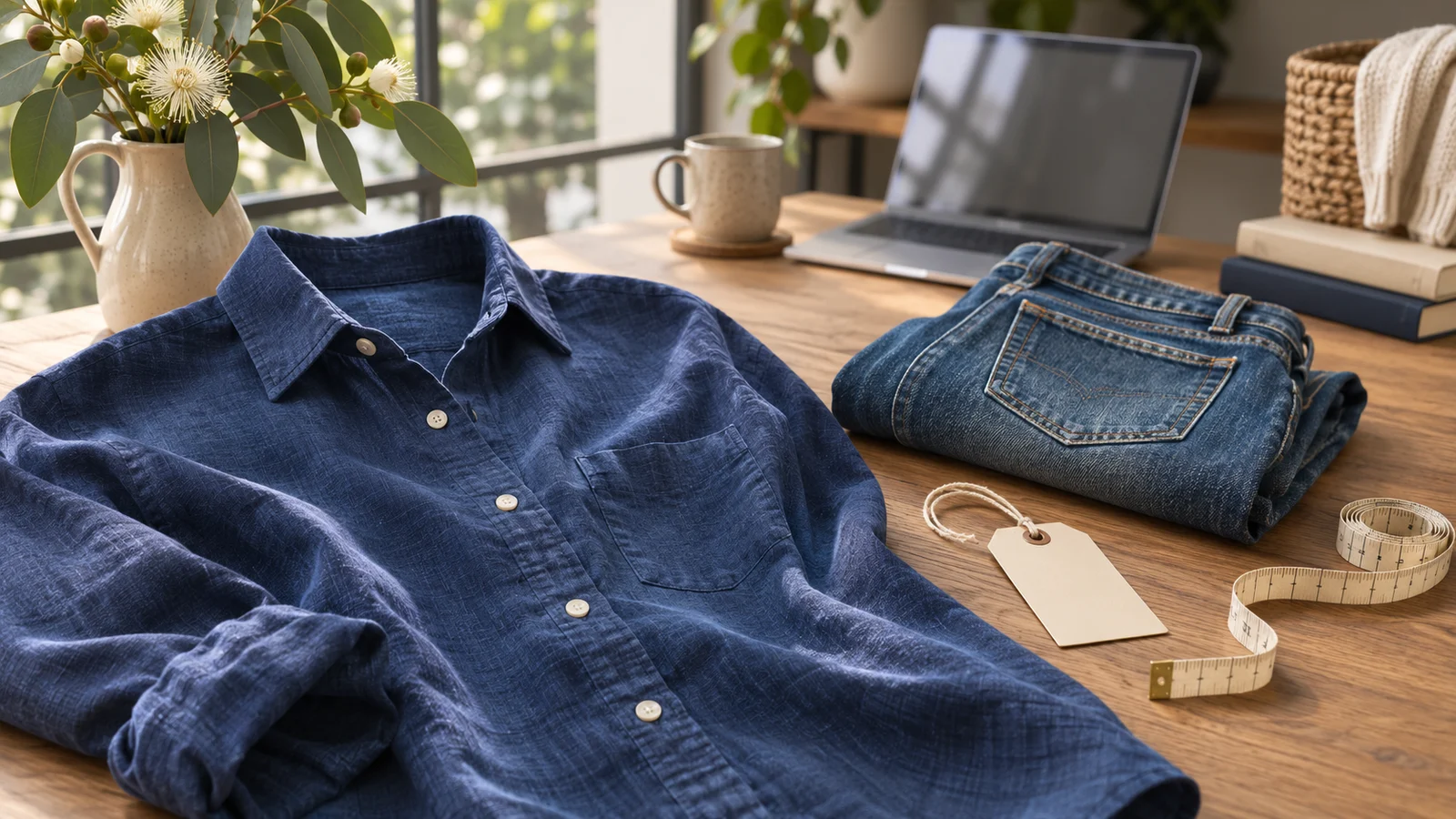
Cover image: AI-generated editorial illustration.